
Through our experience working with different clients in the digital marketing space, we have come to appreciate that building an online presence goes beyond regularly publishing content or running advertisements. One question businesses frequently face is why some social media posts attract significant attention while others struggle to reach their intended audiences.
The answer partly lies in the technology working behind the scenes.
Social media platforms increasingly rely on artificial intelligence to determine what users see, when they see it and which content receives greater visibility. Understanding these systems is becoming essential for businesses seeking to grow their digital presence.
A recent development offers a rare opportunity to understand this process better. Elon Musk’s social media platform, X, formerly Twitter, has published the source code behind key parts of its recommendation algorithm.
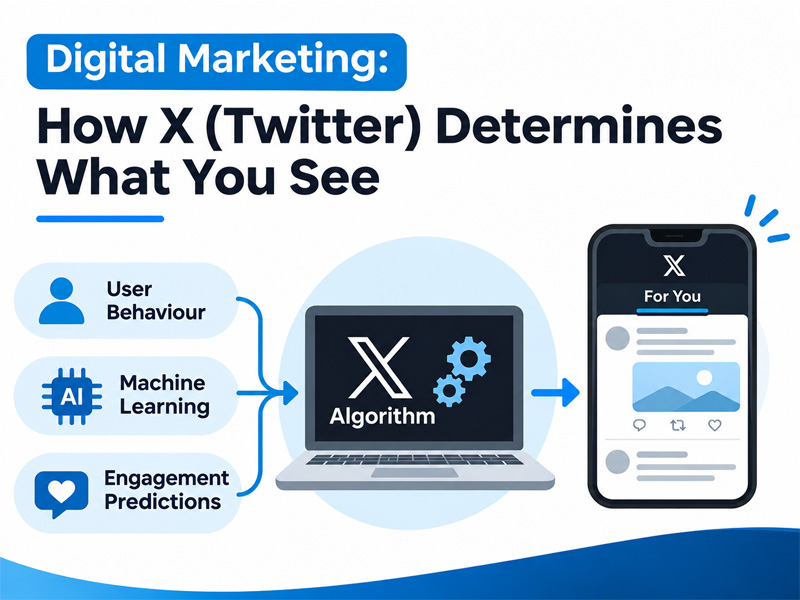
Available through X’s official GitHub repository, the code provides insights into how the platform uses machine learning, user behaviour and engagement predictions to recommend content.
For businesses, marketers and software developers in Uganda, this presents useful lessons about the changing tech environment.
How X Decides What Users See
X does not simply display posts in chronological order. Its recommendation system evaluates content based on a user’s interests and previous interactions. The published code identifies several technologies involved in this process.
Thunder retrieves recent posts from accounts a user follows. Phoenix uses machine learning to rank content based on predicted interest, while SimClusters helps identify content linked to shared interests and communities.
The system also considers posts from accounts outside a user’s existing network. This explains why users can discover content from people they do not follow.
Engagement Is More Than Likes
The algorithm evaluates several possible user actions, including liking, replying, reposting, clicking and spending time reading content. It also considers negative actions such as blocking and reporting. However, the system does not simply reward posts with the highest number of likes. Instead, it uses artificial intelligence to predict how individual users are likely to respond to different posts. This has implications for businesses using social media to attract customers. A post with fewer likes but meaningful discussion or sustained attention may still be valuable.
The lesson is simple: businesses should focus on creating content that genuinely interests their audiences rather than chasing engagement figures.
Why Quality Content Matters
X’s October 2026 updates also highlighted improvements to its Phoenix ranking model, including its ability to predict how long users are likely to spend viewing posts.
This points to a growing emphasis on content consumption and relevance.
For example, a business advertising a product could simply publish a promotional graphic asking customers to buy. Alternatively, it could explain a common customer problem, offer useful information and show how its product provides a solution.
The second approach gives audiences a reason to pay attention and engage.
Although this does not guarantee greater reach, useful content can help businesses build trust and stronger relationships with potential customers.
Why Some Posts Lose Visibility
The published code also reveals how X filters content before recommending it to users.
Posts associated with spam, abusive behaviour, harmful material or suspicious account activity may face visibility restrictions. This means a post can receive a favourable ranking assessment but still be excluded from certain recommendations because it does not meet the platform’s eligibility requirements.
For businesses, maintaining credible accounts, avoiding artificial engagement and publishing responsible content remains essential.
What This Means for Ugandan Businesses
Social media has become an important marketing and customer communication channel for Ugandan businesses, from hotels and restaurants to financial institutions, retailers and technology companies.
However, simply publishing promotional graphics and occasional announcements may not be enough. Businesses need to understand their audiences and provide content that addresses their interests and needs.
A Kampala hotel, for instance, could share travel advice, information about nearby attractions and genuine customer experiences instead of relying entirely on room advertisements.
Similarly, a financial services company could publish practical financial education content to help customers understand money management.
The objective should be to give people a reason to engage with a brand, not simply to ask them to buy something.
Can Businesses Now Beat the Algorithm?
Not necessarily.
Publishing the source code does not mean every factor influencing content distribution is publicly available. X continues to update its recommendation technology, and some operational details and filtering rules remain undisclosed.
Businesses should therefore be cautious about claims promising guaranteed visibility through supposed algorithm secrets.
The greater value lies in understanding how modern recommendation systems work and using that knowledge to improve digital communication.
The VINAStech Perspective
At VINAStech, we believe developments such as this demonstrate why businesses must continually adapt to changing technology. Having a website or social media account is only the beginning. Businesses increasingly need digital strategies and systems that respond to customer needs and technological developments.
Artificial intelligence, automation and data analysis are changing how organisations communicate, attract customers and deliver services.
For Ugandan enterprises, the priority should be identifying technologies that solve real problems and create measurable value.
Through our work in software development, website development, digital marketing and IT consultancy, VINAStech remains committed to providing practical technology solutions that help businesses strengthen their digital presence and improve operations.
The Future of Digital Marketing
Artificial intelligence is increasingly influencing what people discover, read, watch and purchase online.
For businesses, digital marketing must move beyond simply publishing more content. Understanding audiences, producing useful information and building credibility will become increasingly important.
Ultimately, digital success will depend not on who posts the most, but on who understands their audience, uses technology effectively and consistently delivers value.
At VINAStech, we are committed to helping businesses navigate this changing digital landscape through practical, reliable and innovative IT solutions.
Discover more from VINAStech
Subscribe to get the latest posts sent to your email.
