
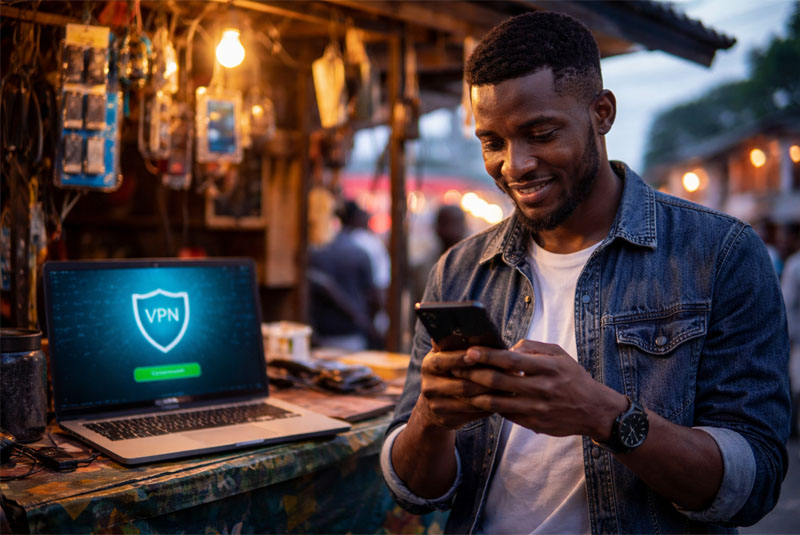
For many Ugandans, social media has become unreliable. Platforms go off, come back, then disappear again. Each time this happens, one thing rises fast. VPN use.
When access to social media is restricted, many people turn to virtual private networks to stay online. The trend has grown during election periods and other tense moments, when authorities say limits are needed to protect public order and stop misinformation.
The challenge is that the message from the state often moves through the same spaces that are restricted. The Uganda Communications Commission has issued updates warning against misuse of online tools. At the same time, many government agencies continue to communicate with the public using social media accounts. Citizens see official posts shared by media houses and screenshots passed around on messaging apps.
Ad: Enroll for any of our programs


This has created a public joke that carries a serious question. If social media is blocked for users but still used by institutions, who is breaking the rule. And in Kampala humor style, some ask, is it time for people to arrest police. It is a joke, but it reflects confusion about enforcement and fairness.
VPNs are often seen as an easy answer, but they come with real problems. A VPN still needs the internet to work. When access is heavily restricted or slowed, many VPNs fail or drop connections. Users complain of slow speeds, high data costs and drained phone batteries. For small businesses that depend on social media for sales and customer care, this adds another cost during already difficult periods.
There are also security risks. Many free VPN apps collect user data or show intrusive ads. Some expose users to tracking or malware. During shutdowns, fake VPN links spread quickly, especially through forwarded messages. People rushing to reconnect often do not stop to check if the app is safe.
Beyond personal use, VPNs also confuse digital data. At VINAStech, something weird that we realised is that we are now rocking the UAE. By the way it is possible given our status but more certainly is because of the rise in the use of VPNs. When VPN use rises, website analytics suddenly show most users coming from “abroad” instead of Uganda. It is funny, but it is also a serious issue for businesses that rely on location data for planning, security and marketing.
The wider impact goes beyond jokes. Social media is now part of how Ugandans trade, learn, campaign and speak. When it is unstable, people do not go silent. They find other paths. VPNs are one of those paths, but they are not perfect and not equal for everyone.
Uganda needs clearer digital rules that match how people live and work today. Consistency matters. If social media is risky, then its use should be explained honestly, including by those in authority who rely on it to reach the public. Until then, VPNs will remain a popular tool, a source of confusion and sometimes the only bridge left online in Uganda.
Discover more from VINAStech
Subscribe to get the latest posts sent to your email.
